
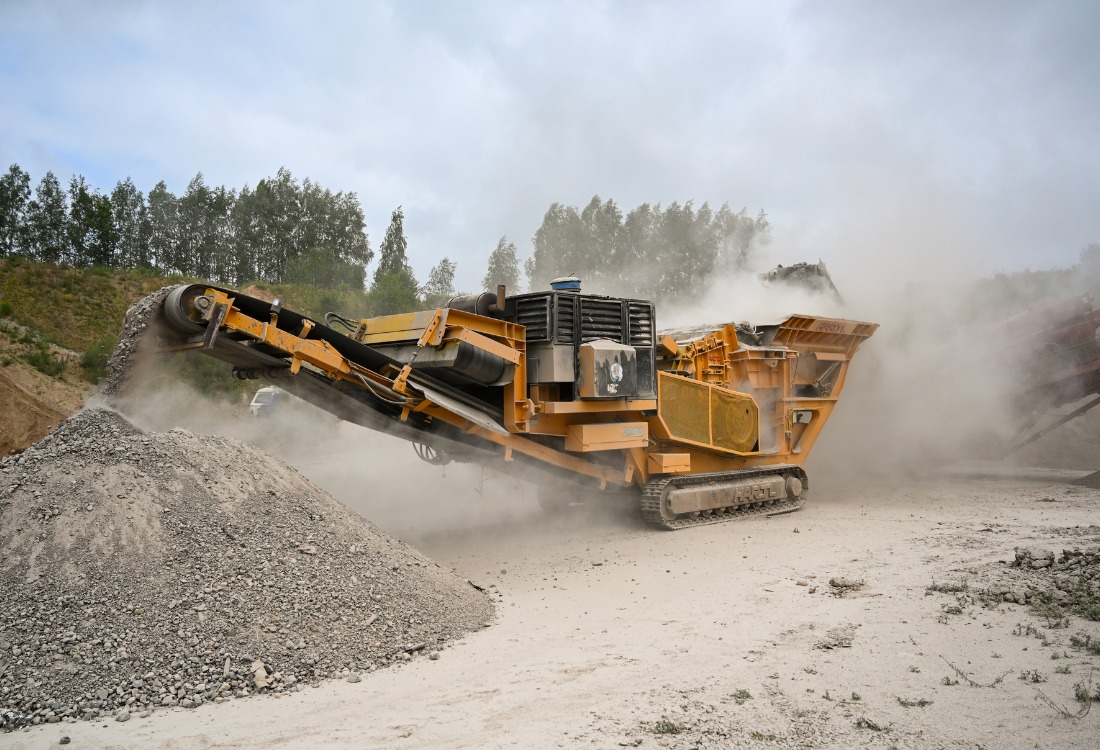
In quarries, dust is inevitable, but if poorly managed, it’s a persistent threat to site safety. Dust may be easy to dismiss when tasks are urgent and deadlines loom, but unmanaged quarry dust has a measurable impact on human health, site safety, and long-term compliance, so the problem should never be disregarded.
In this article, we’ll explore the health and safety risks posed by quarry dust and how effective measures can help to alleviate the problem.

What are the health risks associated with quarry dust?
The fine particles released during quarrying, drilling, blasting, and crushing operations - commonly referred to as respirable crystalline silica - pose serious risks to workers’ health. Prolonged exposure can lead to several life-changing or life-limiting conditions, including:
- Silicosis, a progressive and incurable lung disease caused by inhaling silica dust.
- Chronic obstructive pulmonary disease (COPD), which severely reduces lung capacity over time.
- Increased susceptibility to respiratory infections and asthma.
Sadly, long-term disability and reduced life expectancy among exposed workers is not uncommon. Even short-term exposure in poorly controlled environments can trigger symptoms such as coughing, fatigue, and eye irritation, undermining both workers’ wellbeing and site productivity. The impact also extends beyond the quarry site: in one study, residents living near quarries reported increased rates of eye and nasal allergies, chest tightness, and eye soreness.
Effective quarry dust suppression techniques
Modern dust suppression for quarries involves a combination of proactive and reactive strategies to minimise airborne emissions at the source. Key methods of dust control include:
- Water based suppression: Misting cannons, fixed spray bars, and mobile tanker systems help to dampen dust at emission points.
- Chemical suppressants: Ideal for haul roads and exposed stockpiles, chemical suppressants bind fine particles together to prevent them from becoming airborne.
- Enclosures and barriers: Installing windbreaks or physical covers around crushers and conveyors can dramatically reduce dust dispersion.
- Soil stabilisation techniques: Applied to unpaved surfaces to reduce dust from vehicle movement.
Best practices for implementing dust control
To implement effective quarry dust suppression, site or health and safety managers should adopt a site-specific approach that includes:
- Baseline air quality monitoring to identify high-risk zones
- Real-time dust sensors to trigger automated suppression systems
- Regular maintenance of suppression equipment to ensure consistent performance
- Staff training on PPE usage and hazard recognition
Combining engineering controls with administrative measures leads to better compliance and a safer working environment.
Quarry dust control and regulatory compliance
In the UK and internationally, regulatory bodies require construction and quarrying operations to actively manage dust exposure. Non-compliance can lead to significant penalties, including prosecution under health and safety legislation, fines and enforced site shutdowns, and damage to the business’s reputation and contractor relationships.
Find out how Best-Chem can help your dust suppression
At Best-Chem, we have over 20 years’ experience of dust control in the quarrying industry and can provide practical and effective solutions to controlling fugitive dust emissions.
For more information, please call us on 01530 442969 or send us a message.

Image Source: Canva